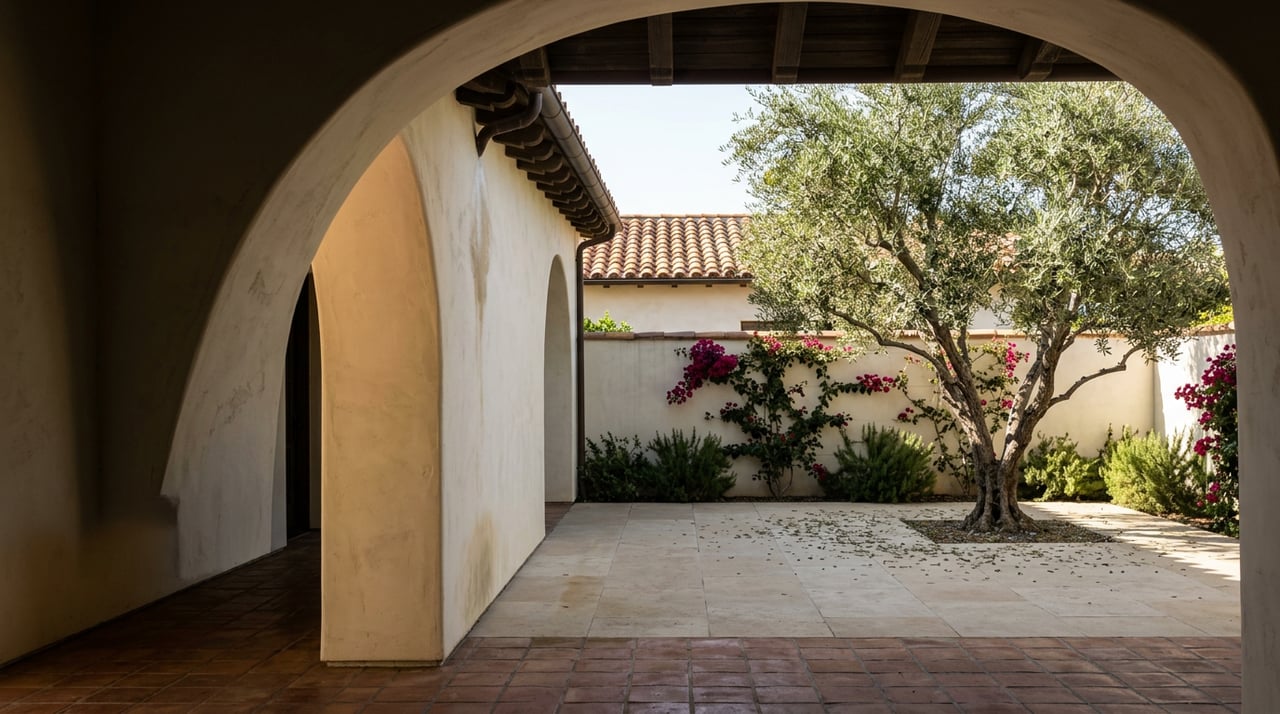
Los Feliz Village Just Got Bigger, and Not the Way You'd Think
September 24, 2026
September 24, 2026
Jeff Vance opened Old Gold Tomato Pies expecting a pizza crowd. What he got were people cutting through on their way to something else. "We see people who are heading to a movie at the Vista or to the bookstore around the corner and pop in and have a slice or two," he said after opening this year. That kind of foot traffic is not an accident of good pizza. It is what happens when a half-mile of Vermont Avenue and Hillhurst Avenue quietly becomes busier, longer, and larger than it was two years ago.
The easy story about Los Feliz Village right now is the restaurant boom. Wilde's, Vandell, and Old Gold Tomato Pies have all opened within the last year, and each one is doing real business on top of a street that already had the Dresden, Kismet, and Il Capriccio. That story is true, but it is only half of what changed. The Village also picked up a new weekly rhythm that did not exist before last fall, and its official boundary moved several blocks south this year. Put those two facts next to the restaurant openings and a clearer picture shows up: the neighborhood did not just get new places to eat. It got a longer week and a longer street.
For years, the Los Feliz Flea meant one thing: a Saturday morning stop at Our Mother of Good Counsel, the church at 2060 North Vermont Avenue that has hosted the market since it began. About eighteen months ago, the flea moved its main footprint to a larger space at Vintage Land. This year, it came back to its original church lot on the first, third, and fifth Saturdays of the month, running from 9 a.m. to 3 p.m., while continuing at its newer location on the second and fourth Saturdays from 11 a.m. to 5 p.m.
That alone would just be a scheduling quirk. What makes it matter is what got added alongside it. Starting last October, the same organizing team launched the Los Feliz Village Farmers Market, held Fridays from 3 to 8 p.m. That is a new commitment on a night that used to belong entirely to dinner plans, and it means the walkable stretch of the Village now draws a market crowd two days a week instead of one.
If you have lived here for a while, this is the detail worth filing away: there is no longer a single Saturday-morning ritual to plan around. There is a Friday market, a Saturday flea that alternates locations, and a restaurant scene timed to catch whoever is still on the street when either one lets out.
Wilde's opened on Hillhurst Avenue late last year and has been difficult to get into ever since. The dining room is small, dinner runs Tuesday through Saturday from 5:30 to 10 p.m., and the kitchen keeps a daytime cafe going Thursday through Sunday from 8 a.m. to 1 p.m. The restaurant takes some reservations, but a large share of each night's tables go to walk-ins, which means the line outside is a real part of the experience rather than a fallback for the unprepared.
Vandell, a few doors down on Hillhurst, took over the space that Nossa Caipirinha Bar left behind at the end of 2024. Owners Michael Francesconi and Matthew Glaser, the team behind Donna's in Echo Park, opened it with Republique alums Vay Su and Shawn Lickliter in early December. The bar is largely walk-in by design, with a waitlist system and a maître d' managing the room at the door, and it has kept lines out front since opening night.
"We had so many people in the first few days tell us it feels like another city," co-owner Michael Francesconi said.
That is the part worth connecting to the market schedule. A restaurant that leans on walk-ins does not just benefit from foot traffic. It depends on it. When the Friday farmers market runs until 8 p.m. two or three blocks from Vandell's door, the people browsing produce at 6:45 are the same people who might decide, twenty minutes later, that dinner sounds good and Vandell is right there. The market is not competing with the restaurants for the same evening. It is feeding them.
None of this displaced what was already working. Il Capriccio, the Italian restaurant that has run on Vermont since 2003 under owner Ermanno Neiviller, is still there. So is Kismet, the Mediterranean restaurant Sara Kramer and Sarah Hymanson opened on Hollywood Boulevard in 2017, along with its more casual sister concept, Kismet Rotisserie, which launched next door in 2020. The new spots did not replace the old ones. They gave the same stretch of street more reasons to be full on more nights.
The other change this year had nothing to do with restaurants. The Los Feliz Village Business Improvement District filed its 2026 annual report with the Los Angeles City Clerk, and it extended the district's official boundary south to Fountain Avenue. That brings the BID's footprint into alignment with the Los Feliz Neighborhood Council's District C and pulls the businesses on Sunset Drive fully inside the Village designation for the first time.
This sounds like paperwork until you think about what a BID actually funds: sidewalk cleaning, tree maintenance, banner programs, and the seasonal decor along assessed streets. Every block that moves inside that boundary starts receiving those services. Blocks between Hollywood Boulevard and Fountain Avenue that used to sit on the administrative edge of the Village are now inside its care perimeter. The filing itself notes that assessments have stayed flat against inflation for two decades, which is presumably why the district chose to widen its base rather than raise rates on the businesses already inside it.
If you walk that stretch regularly, this is a fact worth knowing even if you never think about business improvement districts. It explains why a sidewalk that felt neglected two years ago might start getting swept on the same schedule as the blocks around the Vista Theatre.
Put the two threads together and the picture is simple. The Village got longer in time, because Friday now carries a market commitment that Saturday used to carry alone. It got longer in space, because the boundary that decides which blocks receive city-adjacent upkeep now reaches three blocks farther south than it did last year. And the restaurant boom that has gotten most of the attention is really a symptom of both changes at once. More people are moving through the Village on more days, and the businesses opening into that traffic are built around walk-ins because the walk-in crowd is now reliably there.
None of this touched the things that have anchored the Village for a century. The Vista Theatre, the 1923 movie palace that Quentin Tarantino bought and reopened on November 17, 2023, still runs film only on one of the last working VistaVision projectors in the world. The Dresden is still slinging cocktails in the same room it has occupied for generations. What changed is everything built around those constants: a Friday market that did not exist two years ago, a Saturday flea that finally settled into a schedule you can plan against, three new restaurants leaning into the foot traffic both create, and a boundary line on a city filing that quietly decided a few more blocks belong to the neighborhood everyone already calls the Village.
If you are trying to make sense of how a place you already know keeps shifting under your feet, that is usually the real story. Not what is new, but how the new things connect to the old ones.
For more on what is changing, and what is holding steady, across Los Feliz and the surrounding hillside neighborhoods, reach out to Yawar Charlie.
Stay up to date on the latest real estate trends.
Navigating luxury markets requires strategic partners with eyes for detail. Teams combine cutting-edge marketing with personalized services for effortless real estate transitions. Reach out today to start these next chapters with confidence.
ADDRESS
433 N Camden Dr Ste 600
Beverly Hills, CA 90210